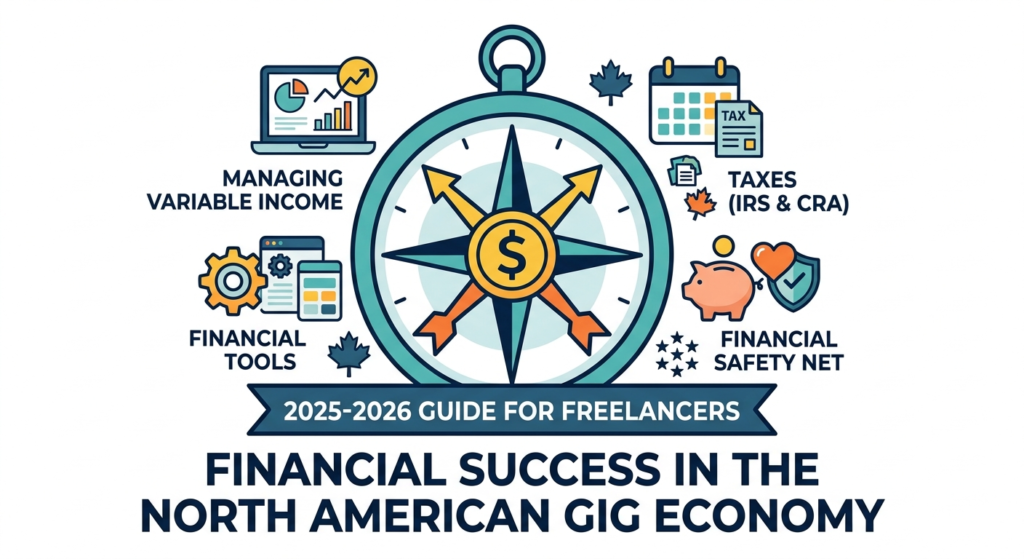
The gig economy has transformed the traditional employment landscape, offering unprecedented flexibility and autonomy to millions across North America. From freelance writers and designers to rideshare drivers and consultants, the allure of being your own boss is undeniable. However, this freedom comes with a unique set of financial challenges that traditional employment often shields us from. For freelancers and gig workers in Canada and the United States, mastering personal finance is not just an advantage—it’s a necessity. This comprehensive guide, tailored for 2025-2026, will equip you with the knowledge and strategies to navigate the financial intricacies of the gig economy, ensuring your financial well-being and long-term success.
The North American Gig Economy: A Growing Force
The gig economy, characterized by short-term contracts, freelance work, and on-demand services, continues its rapid expansion across Canada and the USA. Driven by technological advancements, changing workforce demographics, and a desire for greater work-life balance, it’s projected to be a dominant force in the labor market for years to come .
Key Trends for 2025-2026:
•Increased Adoption: More individuals are choosing freelancing, either as a primary income source or a supplementary one.
•Platform Proliferation: A growing number of platforms connect gig workers with clients, specializing in various industries.
•Regulatory Scrutiny: Governments are increasingly examining worker classification, benefits, and tax obligations for gig workers.
•Demand for Specialized Skills: High-value freelance roles in tech, marketing, and consulting are on the rise.
Financial Realities: Embracing the Irregular Income Mindset
One of the most significant differences for gig workers is the irregularity of income. Unlike a steady paycheck, freelance earnings can fluctuate wildly. This necessitates a fundamental shift in financial planning.
Strategies for Managing Variable Income:
1. Build a Robust Emergency Fund: Aim for at least 6-12 months of living expenses in a separate, easily accessible savings account. This buffer is crucial for lean months or unexpected expenses.
2. Implement a “Pay Yourself First” System: Treat your future self as a priority. Automate transfers to savings, retirement, and tax accounts as soon as you receive payment.
3. Adopt a Flexible Budgeting Method: Traditional fixed budgets may not work. Consider:
•Zero-Based Budgeting: Assign every dollar a job, ensuring no money is left unaccounted for.
•The 50/30/20 Rule (Adapted): Allocate 50% to needs, 30% to wants, and 20% to savings/debt repayment, adjusting percentages based on income fluctuations.
Mastering Taxes: A Cross-Border Guide for Freelancers
Taxes are often the most daunting aspect of freelancing. Without an employer deducting taxes at the source, gig workers are responsible for calculating and remitting their own contributions. The rules vary significantly between Canada and the USA.
United States (IRS) Tax Obligations:
•Self-Employment Tax: Freelancers are responsible for both the employer and employee portions of Social Security and Medicare taxes, totaling 15.3% on net earnings. Fortunately, 50% of this self-employment tax is deductible.
•Estimated Taxes: Since taxes aren’t withheld, freelancers must pay estimated taxes quarterly (April 15, June 15, September 15, January 15 of the following year) to avoid penalties.
•Common Deductions: Maximize deductions to lower your taxable income. These can include home office expenses, business travel, professional development, health insurance premiums, and a portion of self-employment taxes.
•New for 2026: Be aware of potential new deductions or allowances, such as the ability to deduct up to $25,000 in qualified tips from your taxable income base, if applicable to your gig work.
Canada (CRA) Tax Obligations:
•Income Tax: Freelancers report their gross income and deduct eligible business expenses to arrive at their net income, which is then subject to federal and provincial income taxes.
•Canada Pension Plan (CPP): Self-employed individuals must pay both the employer and employee portions of CPP contributions. This is calculated on your net self-employment income.
•GST/HST: If your annual gross revenue from taxable supplies exceeds $30,000, you must register for and collect Goods and Services Tax (GST) or Harmonized Sales Tax (HST) and remit it to the CRA. You can also claim Input Tax Credits (ITCs) for GST/HST paid on business expenses.
•Installment Payments: Similar to the U.S., Canadian freelancers may need to pay income tax and CPP contributions in quarterly installments if their net tax owing exceeds a certain threshold.
•Deductible Expenses: The CRA allows deduction of any reasonable current expense incurred to earn income, including home office expenses, vehicle expenses, advertising, and professional fees.
Key Cross-Border Tax Considerations:
For freelancers working across the border or residing in one country while earning in another, the Canada-U.S. Tax Treaty helps prevent double taxation. However, understanding residency rules and specific reporting requirements (e.g., FBAR for U.S. persons with Canadian accounts) is crucial. Consulting a cross-border tax specialist is highly recommended.
Building a Comprehensive Financial Safety Net
Without employer-sponsored benefits, freelancers must proactively create their own safety nets.
Health Insurance:
•United States: Options include plans through the Affordable Care Act (ACA) marketplace, private insurance, COBRA (if transitioning from traditional employment), or professional association plans.
•Canada: Provincial health plans cover basic medical services. However, freelancers will need to secure private supplemental insurance for dental, vision, prescription drugs, and other extended health benefits.
Retirement Planning:
•United States: Explore options like a Solo 401(k) (allowing both employee and employer contributions), a Simplified Employee Pension (SEP) IRA, or a Savings Incentive Match Plan for Employees (SIMPLE) IRA. These offer significant tax advantages.
•Canada: Contribute to a Registered Retirement Savings Plan (RRSP) for tax-deferred growth and a tax deduction. A Tax-Free Savings Account (TFSA) offers tax-free growth and withdrawals, making it an excellent complement to an RRSP.
Disability and Life Insurance:
Consider private disability insurance to protect your income if you’re unable to work, and life insurance to provide for dependents.
Essential Financial Tools for the Modern Freelancer
Leverage technology to simplify your financial management and stay organized.
| Category | Recommended Tools (2025-2026) | Key Features for Freelancers |
| Budgeting & Expense Tracking | QuickBooks Self-Employed [9] YNAB (You Need A Budget) Origin | Integrates banking, tracks income/expenses, categorizes transactions, helps with tax estimates. YNAB focuses on giving every dollar a job. Origin offers comprehensive personal finance management. |
| Invoicing & Payment Processing | FreshBooks HoneyBook Wave Accounting | Professional invoicing, recurring invoices, online payment acceptance, expense tracking, time tracking. FreshBooks is often considered the gold standard for client experience. |
| Accounting & Tax Preparation | QuickBooks Self-Employed TurboTax Self-Employed Wave Accounting | Automates bookkeeping, generates financial reports, simplifies tax preparation by categorizing income and expenses, calculates estimated taxes. |
| Project Management | Asana Trello ClickUp | Organizes tasks, manages client projects, tracks deadlines, facilitates collaboration, helps manage workload and avoid burnout. |
Strategic Financial Habits for Long-Term Success
Beyond tools and knowledge, cultivating disciplined financial habits is paramount.
1. Separate Business and Personal Finances: Open dedicated bank accounts and credit cards for your business. This simplifies expense tracking, tax preparation, and provides a clearer picture of your business’s profitability.
2. Automate Everything Possible: Set up automatic transfers for savings, investments, and estimated tax payments. This removes the temptation to spend money before it’s allocated.
3. Regular Financial Reviews: Schedule monthly or quarterly reviews of your income, expenses, budget, and tax obligations. Adjust your strategy as needed.
4. Invest in Professional Development: Continuously upgrade your skills to remain competitive and command higher rates.
5. Seek Professional Advice: A financial advisor specializing in self-employment or a cross-border tax accountant can provide invaluable guidance, saving you time and money in the long run.
Conclusion
The gig economy offers an exciting path to professional freedom, but it demands a proactive and informed approach to financial management. For freelancers in Canada and the United States, understanding the nuances of irregular income, mastering tax obligations, building a robust safety net, and leveraging the right financial tools are critical for success. By embracing these strategies and cultivating disciplined habits, you can transform the challenges of freelancing into a powerful engine for financial growth and a sustainable future.
References
[1] Jobbers. (n.d.). What is the gig economy? Complete 2026 guide.
[2] IRS. (2025, November 9). Self-employment tax (Social Security and Medicare taxes).
[3] Intuit QuickBooks. (2025, November 17). 23 self-employed tax deductions for 2026.
[4] Wise. (n.d.). Self-Employment Tax Form: Guide for US Freelancers (2026).
[5] Kata Accounting. (2026, January 27). A Simple Guide to Self-Employment Taxes in Canada for 2026.
[7] Meriwest. (2025, October 8). Financial Planning for Freelancers and Gig Workers.
[9] Freelancing Gig. (2026, January 17). Best tools for freelancers in 2026.
[10] Origin. (2026, March 3). Best Personal Finance Apps for Freelancers in 2026.
[11] Jobbers. (2026, April 13). Best Invoicing Software for Freelancers 2026.